From Gaza to Kashmir: The Limits of Trump’s Conflict-Resolution Diplomacy

Since its inception in 1901, the Nobel Peace Prize has primarily recognised contributions to four broad areas: arms control and disarmament, peace negotiations, the advancement of democracy and human rights, and efforts to build a more orderly and peaceful international system. In the 21st century, the Nobel Committee has also expanded its scope to include initiatives addressing climate change and environmental threats, viewing them as integral to global peace and stability.

Namratha Rampalli and Karamala Areesh Kumar

South Asia’s Quiet Refugee Crisis: Caught Amid Law, Identity, and Climate

I grew up in Guwahati (Assam), where questions of identity were never theoretical. They surfaced in school registers, land records, police verifications, and anxious family conversations. Some people carried documents with them like talismans. Others lived in fear that a single missing paper could erase their place in the only country they had ever known. Long before I understood the politics of migration, I witnessed its emotional cost.

Urvika Sharma

Between Isolation and Recognition: Israel, Palestine and the New Global Consensus

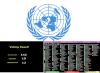
On September 12, 2025, 142 nations voted in favor of a two-state solution, 10 against, and 12 abstained — within 24 hours of the Israeli prime minister declaring that Palestine would never be a state. Major countries, including Saudi Arabia, France, and India, have endorsed the resolution, acknowledging Palestinian suffering. This raises a critical question: Will the adoption of the two-state resolution change the Israel–Palestine conflict, or will the cycle of violence continue?

Tahreem Asim and Karamala Areesh Kumar

Militant Violence in Jammu and Kashmir Post-Abrogation of Article 370

October 06, 2025

Abstract: This article presents a chronological and thematic analysis of militant violence in Jammu and Kashmir from the abrogation of Article 370 of the Indian Constitution in August 2019 to July 2025. It traces three distinct phases: an initial decline in attacks due to lockdowns and security restrictions (2019-2020); a resurgence marked by hybrid militancy, targeted killings, and intimidation of civilians (2021-2023); and a lethal escalation involving high-profile and audacious assaults, intensified counterterrorism operations, and cross-border tensions (2024-2025).

ANIMESH ROUL

Weaponising victimhood: How Khalistanis, Islamists exploit the liberal West

July 13, 2025

In mid-June 2025, ‘Pro-Khalistan’ group Sikhs for Justice supporters packed Calgary’s City Hall square, waving Khalistan flags and chanting “Kill Modi politics” while demanding that India be “Balkanised” as Prime Minister Narendra Modi attended the G7 summit nearby (Global News, Canada, June 16).

ANIMESH ROUL

TM: Rising Islamist and Anti-Hindu Sentiment in Bangladesh in Wake of Pahalgam Attack

June 26, 2025

Bangladesh’s political and religious landscape has witnessed a sharp sectarian turn since the ouster of former Prime Minister Sheikh Hasina and her flight to India in August 2024. What began as protests over job quota reforms soon escalated into a broader civil uprising. Exploiting the ensuing power vacuum, factions that include Islamist groups have expanded their influence, propagating anti-Hindu sentiment nationwide.

ANIMESH ROUL

Missiles, Misinformation, and Minds: Why India Must Build Information Warfare Infrastructure

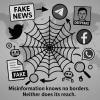
The May 2025 India-Pakistan conflict offered a sobering demonstration of how modern wars are no longer confined to physical battlefields alone. Alongside precision strikes and conventional military operations, both countries engaged in a fierce struggle for control over public perception, media narratives, and psychological advantage. The widespread use of misinformation and disinformation across platforms such as X (formerly Twitter), Telegram, Facebook, WhatsApp, and YouTube transformed the conflict into a full-spectrum hybrid war.

ANIMESH ROUL

A month after Pahalgam: How every Indian can expose Pakistan’s terror playbook

It has been one month since the brutal Islamist terror attack in Pahalgam, Jammu and Kashmir (April 22, 2025), where civilians were deliberately targeted and killed after being asked their religion — a cold-blooded and calculated act of violence. The incident stands as yet another grim reminder of the enduring and well-orchestrated threat posed by Pakistan-based Islamist terror networks.

ANIMESH ROUL

The Landmine Ban at a Crossroads: Strategic Retreats and Treaty Breaches

On April 1, 2025, Finland’s Prime Minister announced the country’s intention to withdraw from the international treaty banning anti-personnel land mines. Contrary to the date’s association with pranks, this declaration is no April Fool’s joke. Historically, wars have compelled states to suspend, derogate from, or even terminate treaty obligations. In many cases, the erosion of treaty commitments becomes visible first on the battlefield before formal withdrawals are announced.

AJEYE LELE

Moral Policing, Public Floggings, and the Decline of Girls' Education in Taliban ruled Afghanistan

Since the Taliban's return to power in August 2021, Afghanistan has faced a sharp decline in human rights, with women and minorities bearing the brunt of repression. The Taliban’s enforcement of moral policing, public floggings, and the systematic dismantling of girls' education reflects their rigid interpretation of Sharia law despite global condemnation. This article examines the impact of these policies on Afghan society, particularly women and girls while highlighting the Taliban’s justification through religious edicts.

ANIMESH ROUL